Teams, host cities, partners, and ocean advocates join forces to drive ocean protection ahead of The Ocean Race Europe
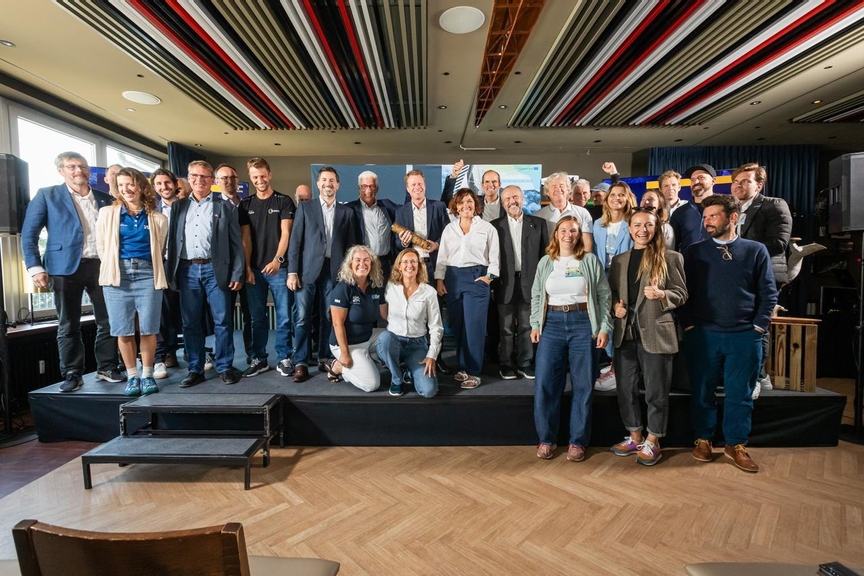
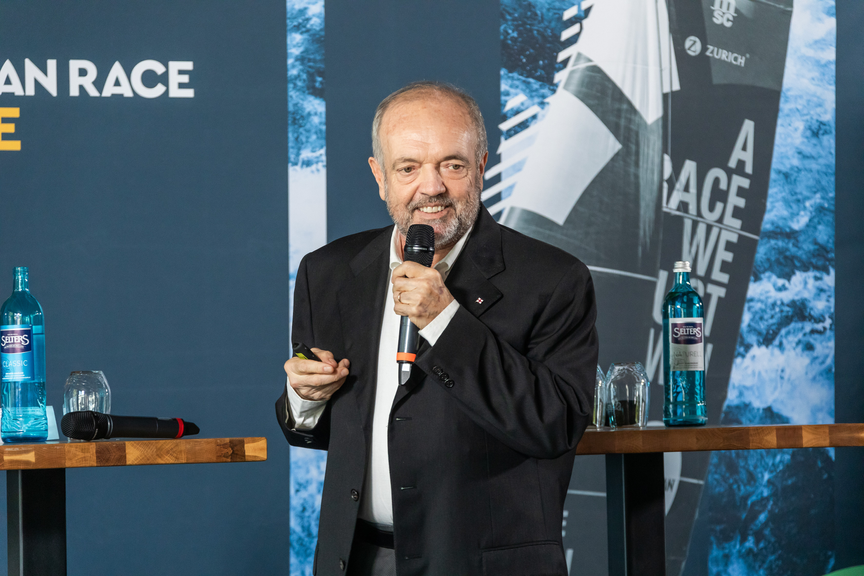
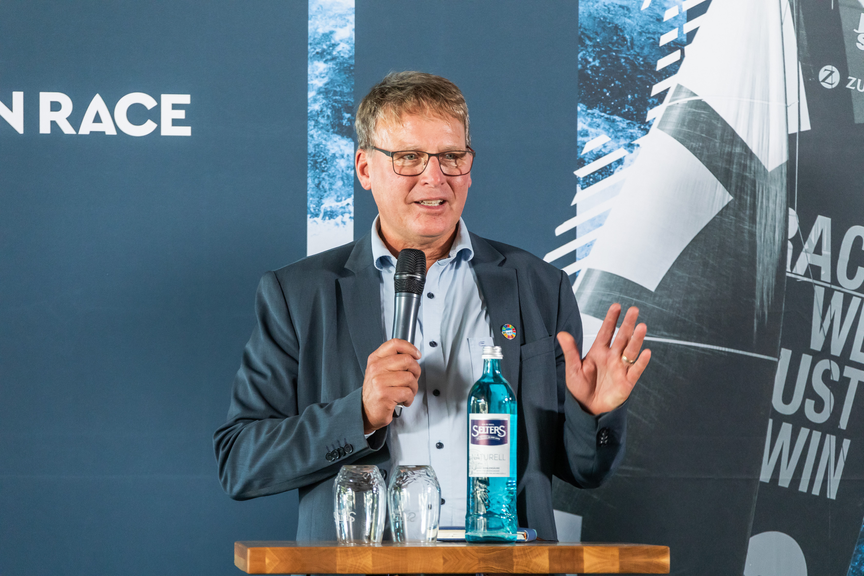
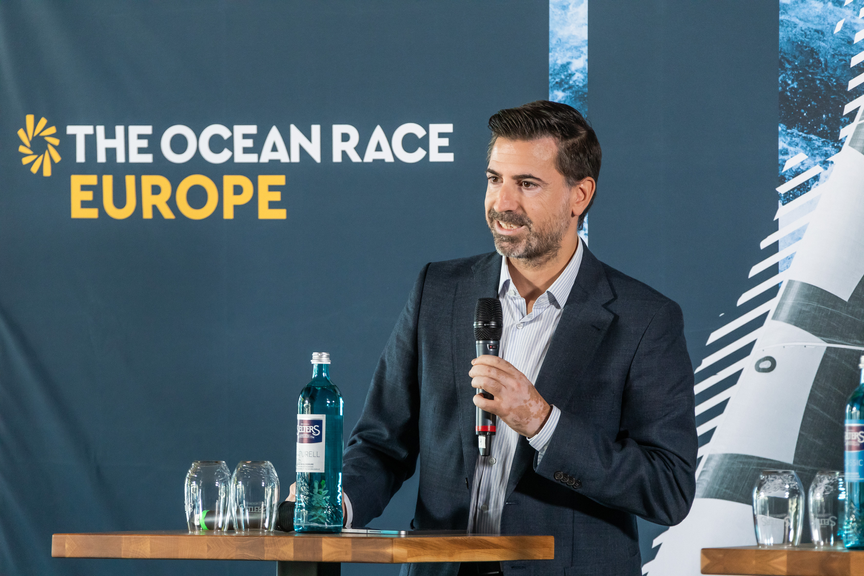
Kick-off event at Kiel.Sailing.City, the start port of the 2025 European race, gathers teams, host cities, partners and scientists around ocean protection
The Ocean Race - the round the world race known as the toughest test of a team in sport and an ongoing platform for making a meaningful difference to ocean health - brought the spirit of collaboration and teamwork to the race to protect the ocean in Kiel, Germany on Tuesday.
The German city will be the start port of The Ocean Race Europe on 10 August 2025 and with less than one year to go to the start, the event “Connecting our Seas - A new relationship between the Citizens and the Sea”, highlighted the role The Ocean Race Europe will bring together key actors in ocean protection, science, education, advocacy and leverage all stakeholders, with teams, host cities and partners at the core, to drive change.
“The Ocean Race unites people, and The Ocean Race Europe will serve as a unique platform to raise awareness amongst Europeans, and young Europeans in particular to care for the ocean,” said Richard Brisius, Race Chairman at The Ocean Race. “This race exists to bring people together, drive innovation and creativity and all this comes together thanks to the teams and the sailors, the men and women who do extraordinary things at sea. As an ocean racer, you are intensely connected to the sea and you have no choice but to advocate for it. Too many of us have lost our emotional connection to the ocean: let’s use The Ocean Race Europe to support Europeans of all ages in learning to care for the ocean.”
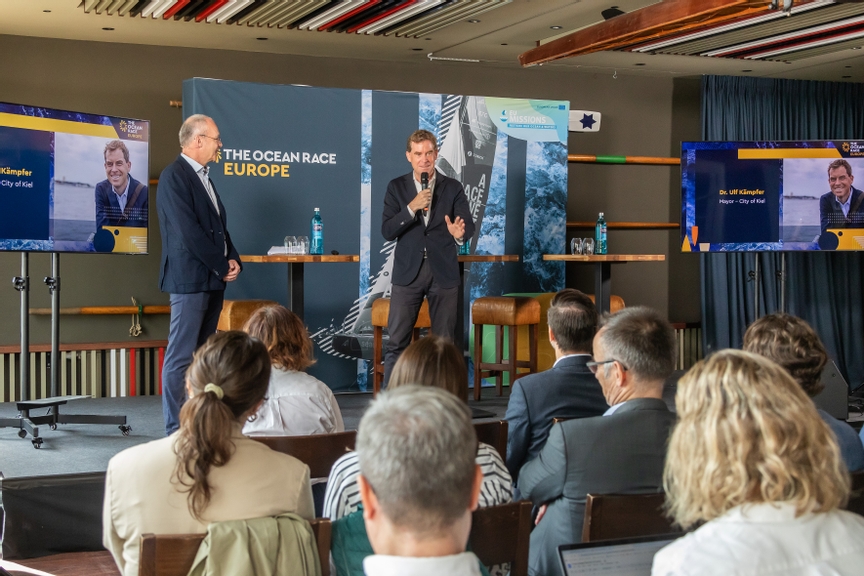
The Lord Mayor of Kiel, Ulf Kämpfer, said: “Sailing is tremendously important for Kiel. With over 3 million guests, Kieler Woche - Kiel Week- has long been a reference in the sport as the biggest sailing regatta in the world, but now we want to organise and present world-class sailing all year round, so The Ocean Race is a perfect match for the city to show our ambition when it comes to the sport.” “As the proud start port of the second edition of The Ocean Race Europe, we will not just be celebrating sailing but will also host a wide range of climate and ocean protection activities as they are essential for our common future. We want to bring these issues closer to everyone and we believe that The Ocean Race is a great way to do it,” he added.
Previously, Kiel was the finish port of the Volvo Ocean Race 2001-02 and last year the German city hosted a hugely successful Fly-By on the penultimate leg of The Ocean Race 2022-23.
Ocean initiatives in Germany
Representing the German Federal Ministry for the Environment, Nature
Conservation and Nuclear Safety, Dr. Ingo Naberhaus, Deputy Head of Division “Protection of the Marine Environment” said: “The Ocean Race Europe is an extremely powerful platform and we are looking forward to cooperating and connecting European societies through a race around Europe.”
To that end, speaking on behalf of the Federal Ministry of Education and Research, Peter Grönwoldt stressed that the EU Mission calls for “social engagement” and “innovative forms of collaboration” and Germany is committing itself and actively contributing to its implementation through better networking and mutual exchange.
“We share the purpose of racing against time for the health of the ocean. The inspiring convening power of The Ocean Race is key for our Mission and we are very happy to have you as a partner to mobilise multitudes at national, regional and international levels. Action is a keyword: it is important to act and to act together, engaging citizens and local communities,” said Elisabetta Balzi, Head of Unit, European Commission, DG Research & Innovation, Healthy Oceans & Seas, online.
Dr. Toste Tanhua, Senior scientist at GEOMAR in the field of chemical oceanography, coordinator of the innovation platform SOOP, and with a long-standing record of cooperating with the sailing community, and The Ocean Race, on collecting ocean data, warned that UNCLOS, the current legal framework for ocean observations, is outdated, and needs to be modified: “The ocean is large, and we need to observe and understand its status. We have successfully gathered valuable ocean data from The Ocean Race for a few years now, and will continue to do so. Within the innovation platform "shaping an ocean of possibility for industry-science collaboration (SOOP)" we are now expanding our efforts to enable non-scientist ocean infrastructure to make ocean observations that provide the information we need for a sustainable ocean. There is a treasure chest of ocean data out there, we do jointly hold the key to open it!”
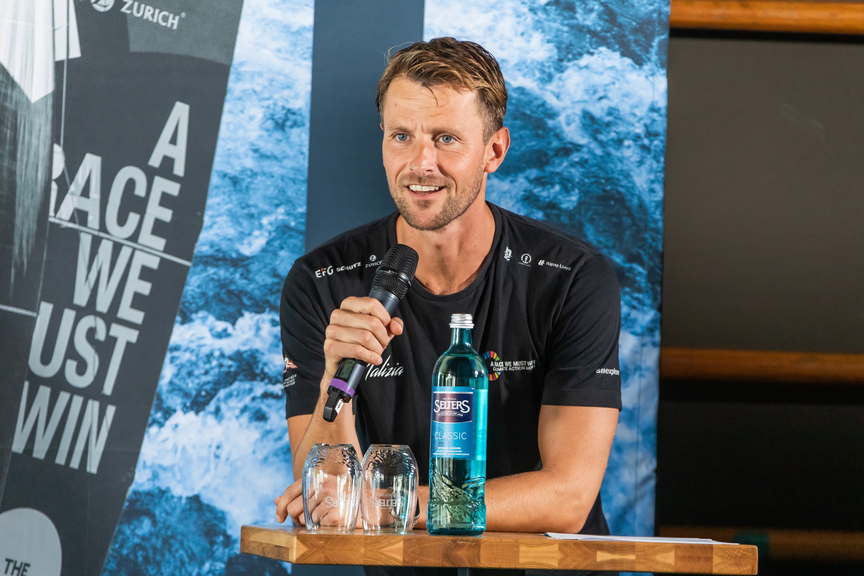
“The next UN Ocean Conference will be hosted in Nice in June 2025, just a few weeks before the start of the second edition of The Ocean Race Europe,” said Cornelius Eich, Head of Partnership & Sustainability at Team Malizia, one of the participating teams in the upcoming European race. “We hope to give momentum to the outcomes and resolutions of this conference and push for ambitious Ocean and Climate protection during this amazing race along European coasts and across Team Malizia’s partnerships, our environmental, scientific and educational programme.”
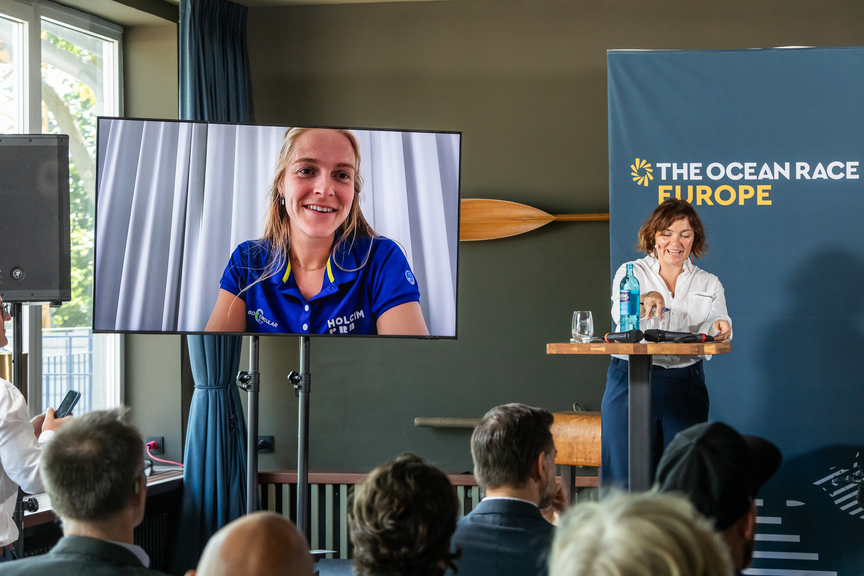
Rosalin Kuiper, co-Skipper at Team Holcim PRB, which will also participate next year, said: “I think it is super important to have events like The Ocean Race Europe, with 6 weeks of very intense racing, and which requires a very different set-up compared to racing around the world and also different skills: it’s close to the coast, so you have to have a different strategy.”
“For young professional sailors it’s a great opportunity to kick-start their career and I am very much looking forward to the start in Kiel with a high-performing and diverse team. We have already installed the Ocean Pack - a special ocean data gathering system for racing yachts - onboard and we are super excited,” she stressed.
The event in Kiel on Tuesday was also an opportunity for The Ocean Race Europe 2025 host cities to showcase best practices and share knowledge from the Baltic to the Mediterranean.
Alfredo Viglienzoni, Deputy Director General of the City of Genova, stressed: “We need to protect the ocean, the most fundamental life supporting system. Being involved with The Ocean Race has been eye-opening for us: we hosted the finale of The Ocean Race Europe 2021 and the Grand Finale of the round-the-world race last year and we are now looking forward to hosting The Ocean Race Europe in 2025, which is a key event not only for the sport of sailing but also to emphasise the importance of sustainability in line with what the city is working on toward greener policies.”
Cartagena, the Spanish stopover for The Ocean Race Europe, is located in the Region of Murcia in southern Spain, which seeks to become an inspiring example in water management:
“The Ocean Race Europe is a powerful reminder of the urgent need to restore our relationship with water in all its forms. From underground aquifers to vast ocean expanses, every drop counts,” said Adrián Zitelli, Director General EU Relations of the Region of Murcia in Southern Spain. “The Region of Murcia has managed to transform the need for water into a virtue, learning to convert wastewater into sustainable water resources. The Ocean Race Europe will be a magnificent showcase to show the world our great water efficiency efforts.”
The full route for The Ocean Race Europe 2025 is now nearing completion, with the race start confirmed for Kiel, Germany followed by stopovers in Portsmouth, UK; Cartagena, Spain; and Genova, Italy. Up to two additional host cities will be added to complete a race course that connects European waters from the Baltic Sea into the Mediterranean. Racing starts from Kiel on 10 August 2025.