The Ocean Race turns the around-the-world race into a global technology laboratory for 2027
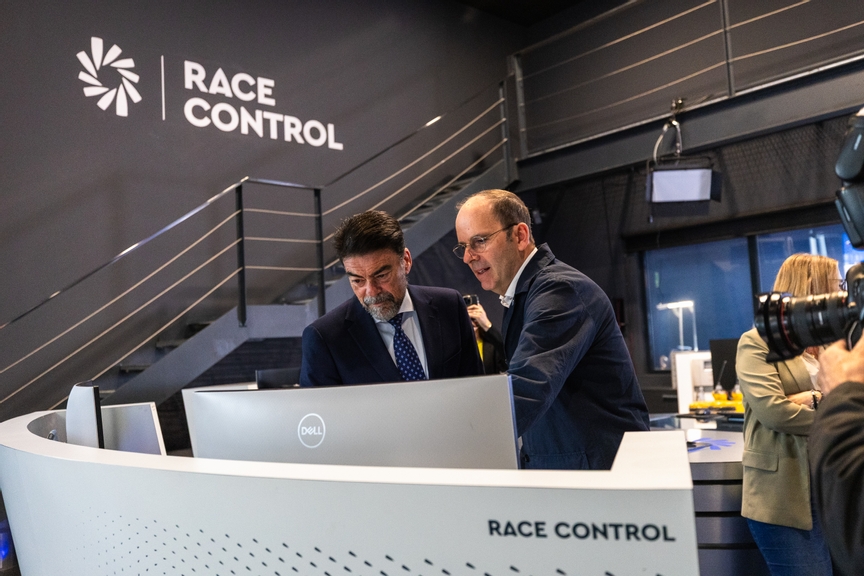
Luis Barcala: "Our will as City Council is for The Ocean Race to continue being linked to the city of Alicante"
Analysing in real time the physical performance of sailors, from heart rate and stress levels to sleep quality or blood oxygen; managing a constant flow of high-quality photography and video in the middle of the ocean; broadcasting the race live with multiple microphones and cameras per boat; ensuring device durability in one of the planet's most hostile environments; optimising signal reception and management on the high seas or compensating for lack of connectivity in areas without coverage. Added to these challenges is the intelligent management of large crowds in open port spaces, controlling capacity and visitor flows. This is the real scenario faced by The Ocean Race, a competition that transcends sport to position itself at the forefront of technological innovation.
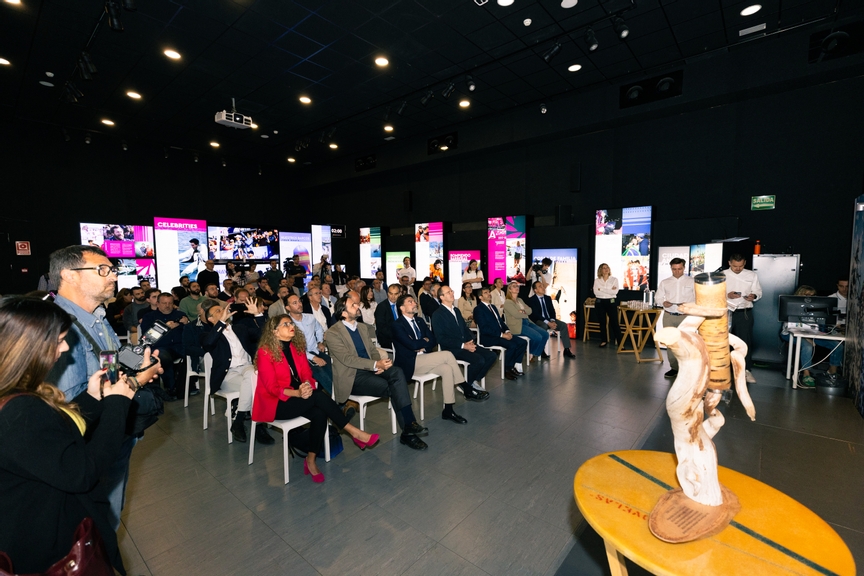
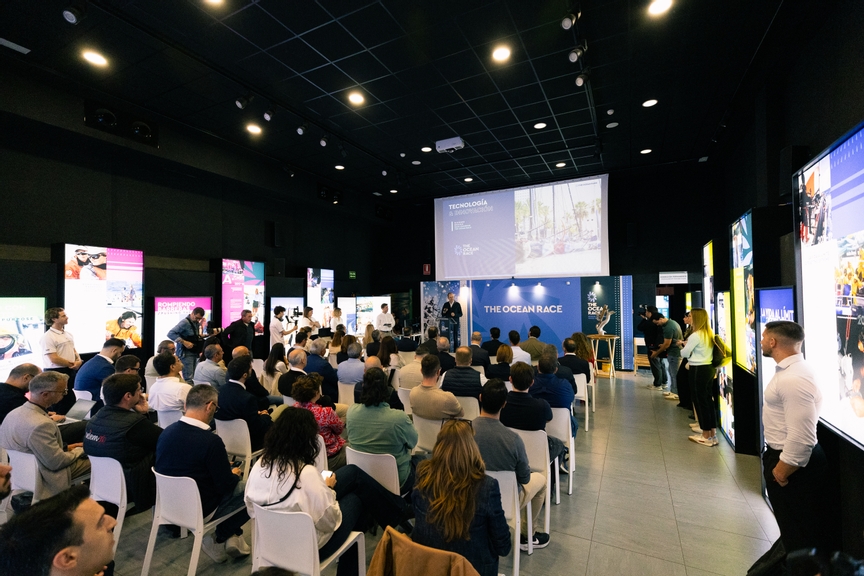
The Ocean Race and the Society for Digital Transformation Projects (SPTD) of the Valencian Community celebrated today the conference "The Ocean Race and the Technology and Innovation challenge in the round-the-world race", a meeting with technology and innovative companies from the territory to explore new collaboration opportunities for the next edition of the race.
The event, held at The Ocean Race Museum, highlighted the key role of innovation in the transformation of major international events, addressing areas such as digitisation, sustainability, fan experience, data management and global connectivity.
"The true value of initiatives like The Ocean Race lies in their ability to connect talent, technology and purpose. We're talking about a global event with more than 50 years of history, deeply linked to Alicante, that projects the city's brand to the world while promoting key values such as sustainability, innovation and social dynamization. The race itself is an advanced innovation laboratory, where nautical technology, digitized systems, race control, advanced meteorology and solutions developed by technology-based companies linked to the blue economy converge," stated Eduardo Pascual, Regional Secretary of Innovation of the Valencian Government.
For his part, the mayor of Alicante, Luis Barcala, highlighted the dual dimension of the event: "The Ocean Race represents, on one hand, a superhuman sporting challenge with legs like the Alicante-Auckland crossing, the longest in history and, on the other, a firm commitment to sustainability and responsibility to the planet. It is a unique global event that unites cultures and territories under shared values. Alicante will make history again with the start on January 17, 2027, having already generated an impact of 467 million euros on Spanish GDP, more than 8,000 jobs and unprecedented global media projection. Our vision is for The Ocean Race to have growing importance in the city and that's why today I announce that on May 26 and 27, Alicante will host the "Stakeholder Conference", which will bring together teams, sponsors and host cities from around the world. We are in talks with the organization to maintain this incredible event in the Valencian Community. We are working to ensure that this 2027 edition is a success and not a success that ends in 2027. Our will as City Council is for The Ocean Race to remain linked to the city of Alicante. That is our commitment and I want to make public that Alicante in collaboration with the Valencian Government and the Alicante Provincial Council will make the maximum effort for Alicante to continue being the Start Port."
In this context, Richard Brisius, race chairman, emphasised the strategic role of innovation: "Since 2008, Alicante has been much more than a Start Port; it has been the engine of The Ocean Race. Today, the competition no longer takes place only on the ocean, but also in the digital environment: in how we tell stories, in how we manage data and in how we connect with global audiences in real time. The next edition will be a true global laboratory, where we seek partners capable of helping us push the limits in artificial intelligence, communications, biometric data or immersive experiences."
Representing the race's title sponsor, Volvo Cars, Jorge Muñoz, Press Director of Volvo Car Spain, highlighted how innovation directly impacts people's lives: "At Volvo we have been innovating for decades with a clear purpose: to improve safety and the human experience. From the invention of the seatbelt in 1959 —with an open patent— to the current development of multi-adaptive systems or electric vehicles with more than 800 kilometers of range, technology must serve people. That same philosophy connects with the spirit of The Ocean Race."
Alicante has been the host and Start Port of The Ocean Race since 2008, establishing itself as the city that has most often hosted the start of the round-the-world sailing race. The start of the 16th edition will take place on January 17, 2027, marking the sixth consecutive time that the fleet departs from the city. The first leg will take the teams to Auckland (New Zealand), in a crossing of approximately 14,000 nautical miles and nearly 35 days of sailing, considered one of the greatest feats in ocean racing.
The conference included an institutional opening, a round table focused on the technological challenges of the event and various working sessions where participating companies explored innovative solutions applicable to a global event of this magnitude.
This initiative is part of a joint effort to connect the Valencian innovation ecosystem with a unique international scenario, where developed solutions can not only be tested in extreme conditions, but also projected on a global scale.
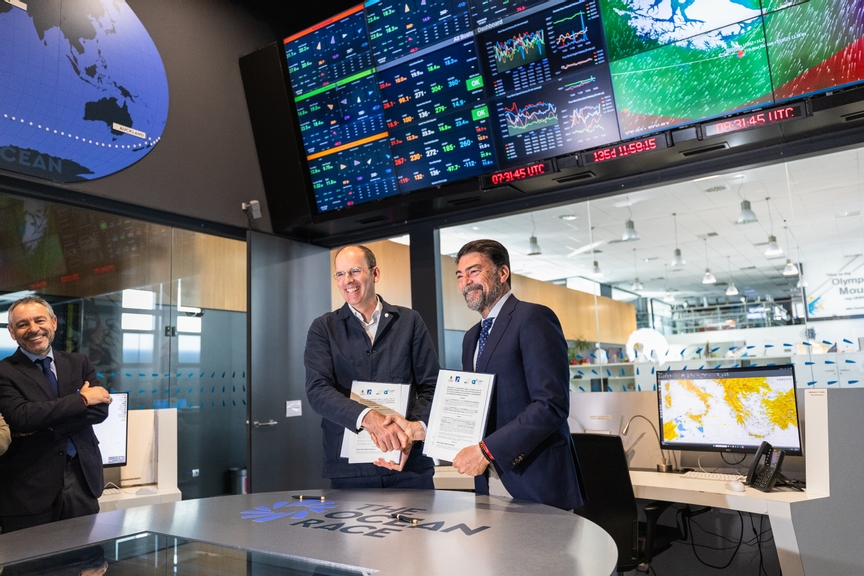
Today's event was the setting for the signing of an agreement with the Local Development Agency, Alicante Futura.
GO2 by Global Omnium has measured the carbon footprint of The Ocean Race Europe 2025, whose calculation has been verified by Bureau Veritas with the official delivery of the certificate during the event; furthermore, The Ocean Race has promoted a positive local impact with the Hortigo2 project in Valencia's market garden area, reinforcing its commitment to environmental regeneration.