Science
Capturing Ocean Data
The ocean is in crisis. Climate change, pollution and overfishing are pushing marine ecosystems to breaking point, yet the true scale of the damage, and exactly where it's happening, is difficult to determine. For the scientists striving to understand the state of our seas, gathering data is a huge challenge: vast stretches of ocean are remote and inaccessible, and scientific expeditions come at a high cost.
This is where The Ocean Race steps in. Every boat competing in our races carries specialist scientific equipment, turning our fleet into a floating network of ocean laboratories. As sailors race across the globe, venturing into some of the most remote and unexplored waters on Earth, they continuously gather critical data that most researchers could never reach. This information, much of it delivered in real-time, is fed directly to world-leading science organisations, helping to transform our understanding of the marine environment and the threats it faces.
Thanks to the support of our teams, we are able to gather a wide range of data, including:
CLIMATE CHANGE INDICATORS

Sea surface temperature, salinity, dissolved carbon dioxide and oxygen are measured by a specialist device that works by drawing seawater through the keel and across a range of sensors. The data - up to 25,000 measurements per day - are transmitted via satellite in real-time and used by international science partners that are studying the impact of climate change on the ocean and predicting how the seas will respond to climate change in the future.
MICROPLASTIC POLLUTION
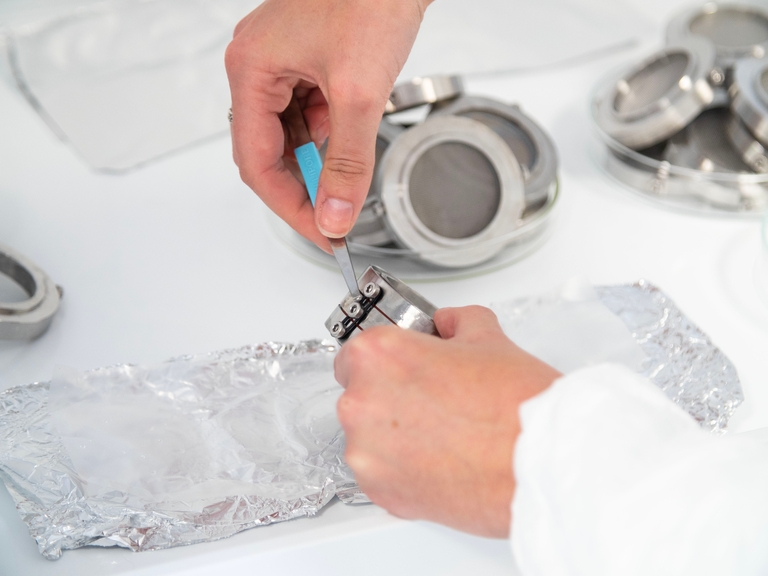
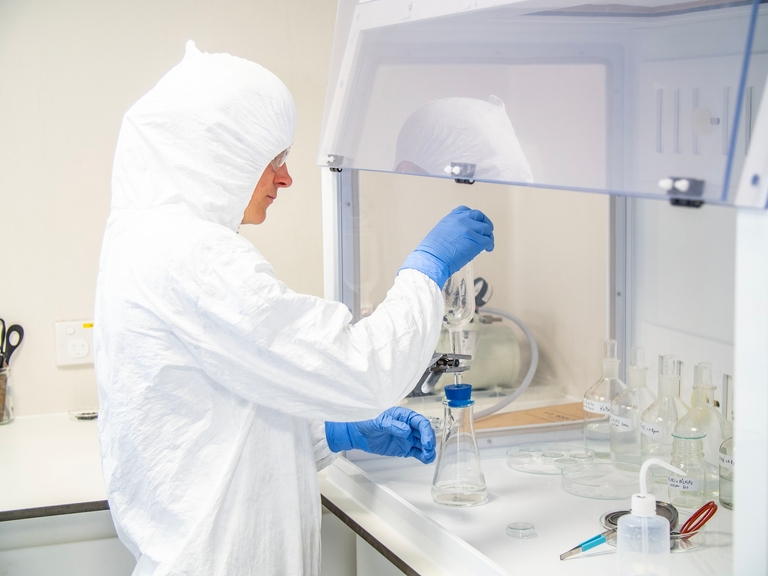
During the race, daily water samples are collected by teams, which are later analysed in a laboratory to detect, classify and quantify microplastic particles. The samples are analysed by scientists to understand the type of plastic polluting the seas, how they are distributed in the ocean and how they moves with currents. This data supports global efforts to track the sources and spread of plastic pollution and to protect marine ecosystems.
METEOROLOGICAL DATA
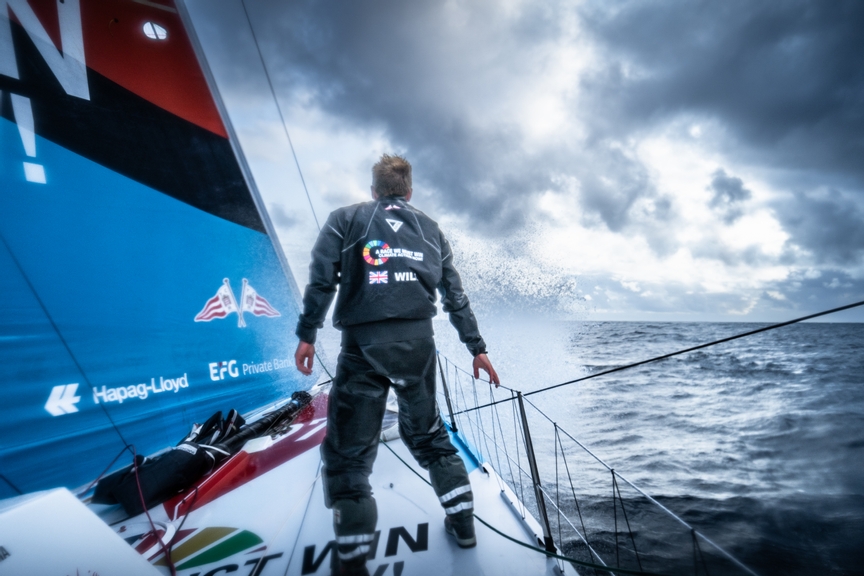
Modern racing boats are packed with sensors: to sail fast and safely, sailors need to know the wind speed and direction, atmospheric pressure, boat speed and many other parameters in real time. Teams share these valuable meteorological and ocean observations with the scientific community in near real-time, which improves weather forecasting, helps predict extreme events, and supports long-term climate research.
OCEAN CURRENTS

Teams deploy buoys in parts of the ocean where data is scarce. Drifting with the ocean currents, the devices send data via satellite that supports climate research and helps scientists better understand how ocean circulation is changing.
OCEAN BIODIVERSITY
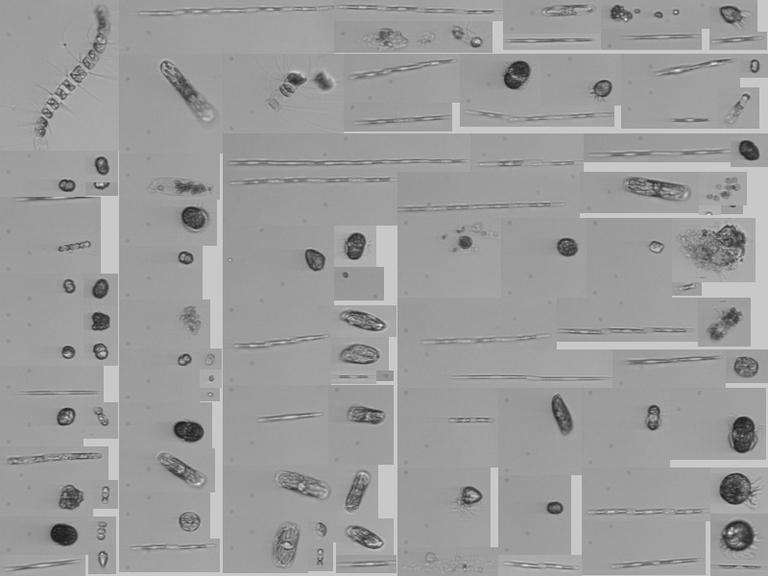
Water samples are captured to test for tiny traces of genetic material left behind by marine life. This environmental DNA (known as eDNA) found in microbes, skin cells, and waste, provides a powerful snapshot of ocean biodiversity. Analysis of the filters helps scientists to track species, monitor diseases and understand how marine ecosystems are changing. Over time, eDNA reveals how the climate crisis is impacting life beneath the surface.
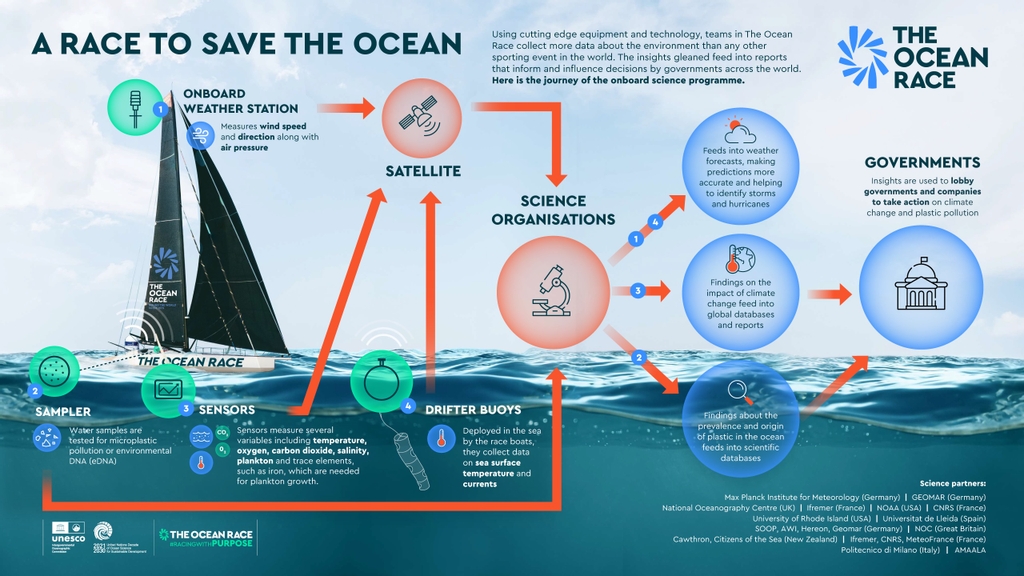
Click here to view infographic in full size
All of the data is open-source and shared with The Ocean Race’s science partners - organisations across the world that are examining the impact of human activity on the ocean. From there it feeds into reports that inform and influence governments across the world, including reports from the Intergovernmental Panel on Climate Change (IPCC) along with databases such as the Surface Ocean Carbon Dioxide Atlas, which provides data for the Global Carbon Budget, a yearly assessment of carbon dioxide that informs targets and predictions for carbon reduction.
Measurements from the surface drifter buoys and onboard weather stations also support efforts by international organisations who work together as part of the Global Ocean Observing System, a network aimed at improving understanding of our one ocean.
The scientific data contributes to the Ocean Decade Odyssey project which is an endorsed project of the UN Decade of Ocean Science (2021-2030).
The Ocean Race 2022-23 featured our most ambitious science programme to date (and what we believe is the most comprehensive science programme of any sporting event in the world). During the 32,000 mile long race, 4.3 million measurements of essential ocean parameters were taken. For the first time ever we made the data visible to the public with the launch of our live data tracker. Click here to explore the data that was collected by teams during The Ocean Race 2022-23 and the data from The Ocean Race Europe 2025.
Our Science programme can be traced back to 2001, evolving over the subsequent Races to gather more measurements across more types of data. As well as contributing to studies about the state of ocean health that are published in papers and the critical reports mentioned earlier, the findings of the Race’s Science programme have made headlines across the world.
One of the most talked-about findings was the discovery of microplastics at Point Nemo - the furthest place from land on the planet, following the collection of water samples during the 2017-18 edition of the Race. This was the first time that microplastics had been found in such a remote location and it contributed to global awareness on the spread of plastic pollution in the ocean.
Since then, data captured during our Races has continued to break new ground, including providing significant insights into the levels of plastic fibres in Europe’s waters and altering estimates of air-sea carbon dioxide exchange in the Southern Ocean.
The Ocean Race Science programme is run in collaboration with world-leading institutes, including:
• SOOP, AWI, Hereon, Geomar (Germany)
• Ifremer, CNRS, MeteoFrance (France)
• National Oceanography Centre (Great Britain)
• Politecnico di Milano (Italy)
• Cawthron, Citizens of the Sea (New Zealand)
• AMAALA (Saudi Arabia)